Meripoint Books

Category: Booknotes

  • Life is Meant to Be Lived

    Life is Meant to Be Lived


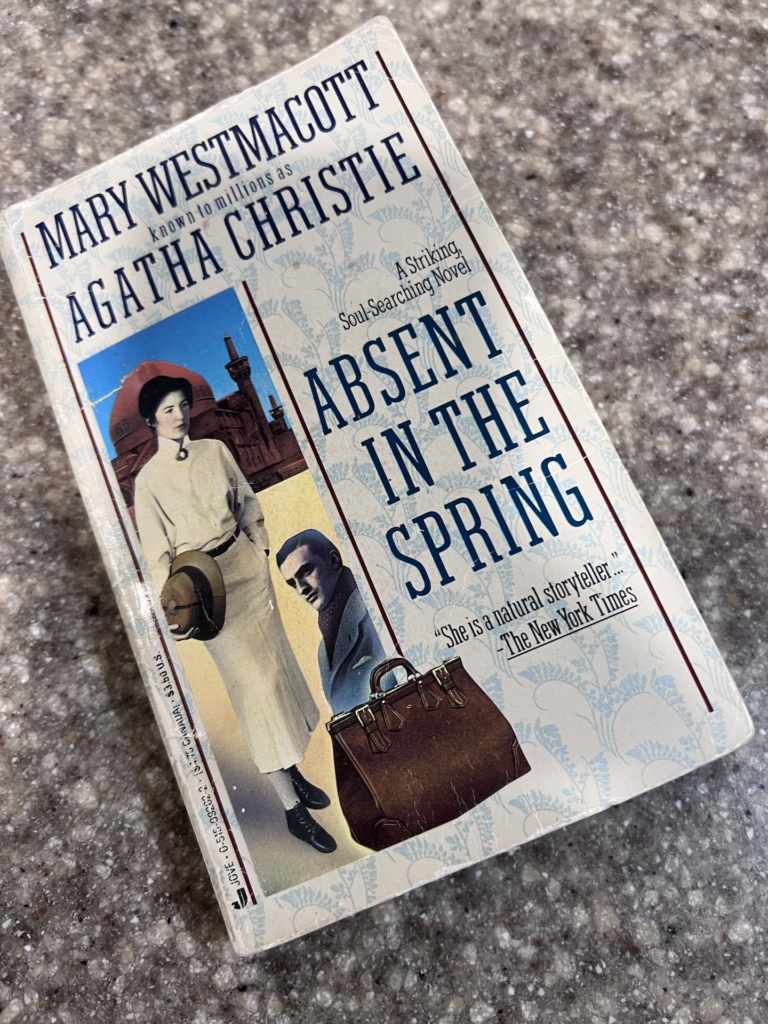
    “And now, just a special word. No lazy thinking, Joan, my dear! Don’t just accept things at their face value—because it is the easiest way, and because it may save you pain! Life is meant to be lived, not glossed over. And don’t be too pleased with yourself!”

  • Witty Prose and Timeless Banter

    “Jeeves, I said, “stand by to consel and advise. The plot has thickened.”

    “I looked at Jeeves. He looked at me. I did not speak, save with the language of the eyes, but his trained senses enabled him to read my thoughts unerringly.”

    Interior of book.

    “Bertie,” said Aunt Dahlia, “I am a weak woman, but if you won’t tread on this insect and throw the remains outside, I shall have to see what I can do. The most tremendous issues hanging in the balance–our plan of action still to be decided on–every second of priceless importance–and he comes in here, telling us the story of his life. Spink-Bottle, you ghastly goggle-eyed piece of gorgonzola, will you hop it or will you not?

    Back cover of book

    “The shades of evening were beginning to fall pretty freely by now, but the visibility was still good enough to enable me to observe that up the road there was approaching a large, stout, moon-face policeman on a bicycle. And he was, one could see, at peace with all the world. His daily round of tasks may or may not have been completed, but he was obviously off duty for the moment, and his whole attitude was that of a policeman with nothing on his mind but his helmet.”

    The Code of the Woosters

    Our book club read a true classic for last night’s meeting. It was chosen by a member who grew up reading P.G. Wodehouse books. Her family enjoyed lively discussions about the books over the dinner table. She brought with her to the meeting, her mother’s copy of The Code of the Woosters, a Vintage Books edition from the 1970s. It still looked fresh and inviting.

    I think that is one way to describe the world built by P.G. Wodehouse in his nearly one-hundred books that gently satirize upper class life in England, for the most part, post WWI: fresh and inviting. He pulls us into a long-gone zany world and pokes fun at it with vibrant characters who are fantastically ridiculous in an innocent and beguiling way. You can’t help but chuckle throughout it all.

    In the Code of the Woosters, we are immediately thrust into the world of Bertie Wooster, a young aristocrat who is pushed in one direction and then another by well-meaning but misguided pals and aunts. Bertie describes himself thus:

    “It has been well said of Bertram Wooster by those who know him best that there is a certain resilience in his nature that enables him as a general rule to rise on stepping stones of his dead self in te most unfavorable circumstances. It isn’t often that I fail to keep the chin up and the eye sparkling…”

    His man-servant, Jeeves, who is quietly omnipresent and all-knowing, is an invaluable pillar in this world.

    Some of our members had difficulty engaging with the story at the beginning. They had never read Wodehouse before and felt a bit lost. I can understand this, as Wodehouse presumes that his readers are fully immersed in British culture. For those who aren’t anglophiles, it could feel like plunging into cold water. However, after a few chapters, the timeless, universal Wodehouse humor takes effect, and you can’t help but start smiling.

    As one member pointed out, Wodehouse adds sublime, unexpected twists not only to the intricate plot but throughout the narrative and dialogue.

    One member of our club explained that P. G. Wodehouse worked diligently to become a master of the written word and humor. Early in his career after he completed the first draft of a manuscript, he reputedly cut it up into individual sentences and taped each to a wall to examine and change. He was well-known for reworking and revising sentence by sentence until he achieved the right rhythm and humor. He aimed for clarity and precision so that his prose seemed effortless.

    Another member impressed upon us the great influence that Wodehouse has had on humorists and comedians who study his works to form their own brand of humor. Among those who acknowledge his influence are: Stephen Fry (who portrayed Jeeves in the BBC series), Douglas Adams (Hitchhikers Guide to the Galaxy), Terry Pratchett (Author of Discworld novels), and John Cleese (Monty Python and Fawlty Towers).

    Near the end of the discussion, our leader asked, “So, what is the Code of the Woosters?” The answer came quickly: “Never let a pal down” followed by “Don’t put self first”.

    It is indeed, a by-gone world. Happily, we can revisit it any time. After all P.G. Wodehouse left us nearly 100 books of timeless humor to in which to completely immerse oneself.


    Journey’s End, eh, Jeeves?”

    “So I should be disposed to imagine, sir.”

  • How to Get Unstuck Again and Again and Again

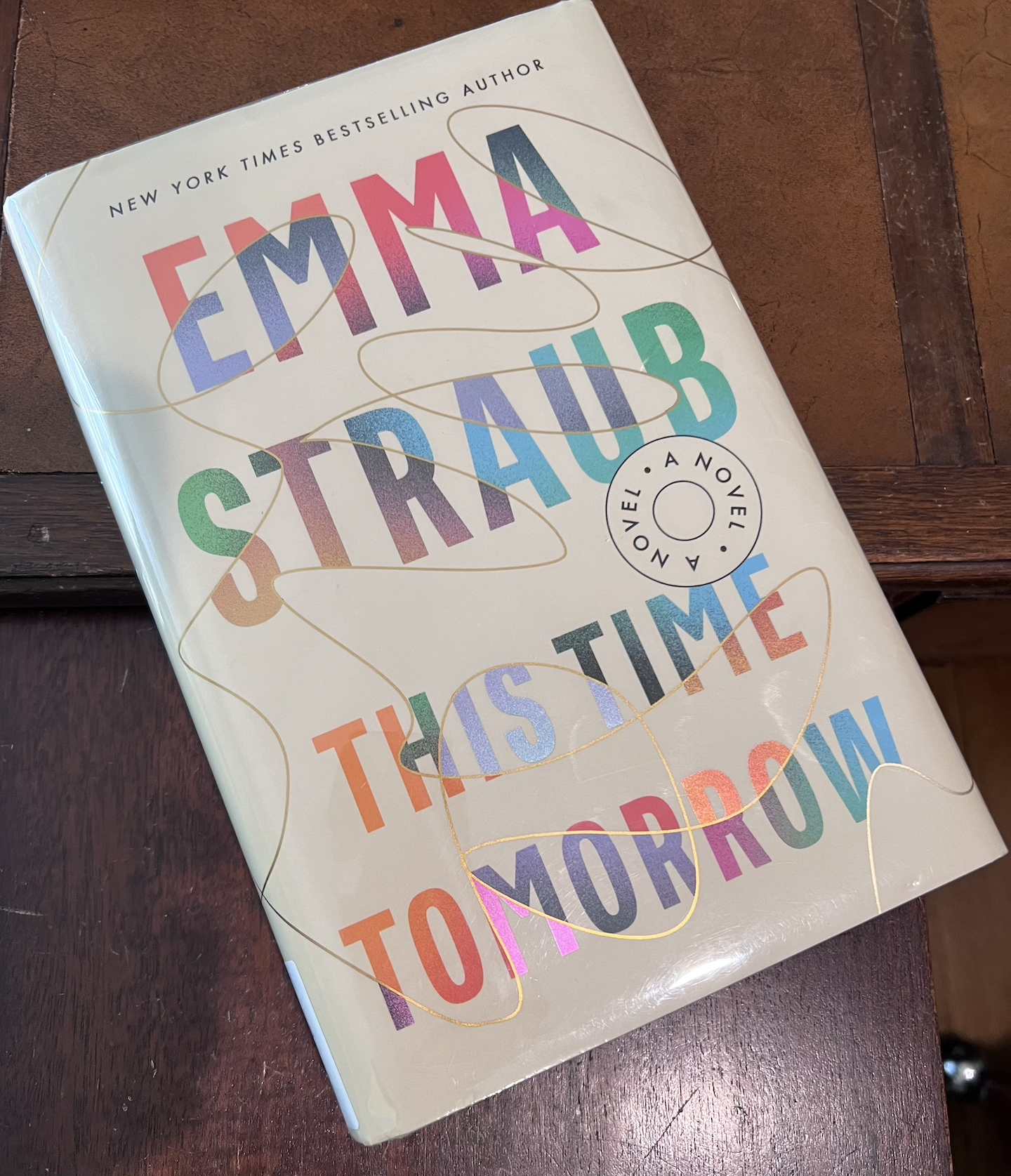
    This Time Tomorrow by Emma Straub (Riverhead Books)

    This month’s book presents us with a character, Alice, about to turn 40. She is a modern New Yorker, single and independent. She has good friends, a steady job, and an apartment within walking distance to her job. Her life is clearly the result of the decisions she has made. She is comfortable. She dines at her favorite restaurants, doesn’t go running because she doesn’t like to. She breaks up with her long-term boyfriend, because, well, just because. She has no responsibilities and no strings attached, except for the situation with her dad, who is lying in a hospital, dying. She visits him every day, weighed down by his impending death.

    When we meet Alice she feels stuck, because she is stuck. She is existing in a stagnant pool of mediocrity. She is aware of this, but she doesn’t have the wherewithal to push herself out of it. Instead of focusing on doing something worthwhile with her life, she decides that she is going to put all of her energies into forestalling her dad’s pending death. The relationship between father, Leonard, and daughter, Alice, is the emotional pivot point upon which this book revolves.

    Alice has grown up in the shadow of her father’s fame; he is the bestselling author of time-travel books. Raised in a sea of this trope, she is taught that time-travel is pure fiction. On her 40th birthday, she tumbles into the discovery that it is real, and suddenly she gains a sense of purpose and agency.

    “It wasn’t just her father that Alice was visiting, it was herself, the two of them together.”

    The reader, previously lulled into the idea that this is going to be a cozy, gentle story about an average woman taking care of her dying dad, is is now thrust into a whirlwind of alternative realities, and is forced to sort out the tangle of time streams.

    So we follow along as Alice teeter-totters between her 16-year-old past self and her 40-year-old present self, which is constantly changing because of the decisions she makes while in her 16-year-old self.

    You have to read the novel in one go. If you put it down for any stretch of time, it will be hard to keep up with her time streams. Time travel stories are always problematic because of the inevitable paradoxes that are difficult to resolve. This novel tries to sidestep the thorniest issues, leaving the reader questioning the plausibility of the tale and the reliability of the narrator.

    Through it all, Alice remains fundamentally, her same stuck, 40-year-old self. We see no growth in 16-year-old Alice, who is in actuality a 40-year-old Alice, who displays no growth either. However, the mutual love shown between father and daughter is heartwarming and carries us along.


  • Innovative Memoirs

    How Does One Write About One’s Life?


    Whenever I meet two people in love, I typically ask them: How did you meet? It’s incredible the many different ways there are to meet a future significant other. For instance, my darling and I met outside just before a dramatic lightning storm. Who would have guessed? But this isn’t unusual as all of the stories I have heard are in their own ways unique and illuminating.

    Innovative Memoirs. We have stories to tell about our lives—leaving home for the first time, the best birthday present ever, a pilgrimage. The question is do we keep these experiences close to our hearts and relay them haphazardly to only those in our midsts—rendering them forever as a fleeting story once heard, details forgotten. Or do we capture these important memories on paper to give them a permanence and stature so that by purpose or chance, others can be enlightened by them?

    A written memoir is a soulful piece of art: a place where one carefully curates those moments most precious. I think we’d all agree that writing down one’s stories is invaluable. The only stumbling block? You have to sit down and write.

    For the time-crunched amongst us, tools have popped up to make writing memoirs easier. You can find various apps and services that will send you a periodic email or text with a question such as “Who was your best friend growing up?” You only have to type up or dictate the answer in a reply, and send it back to the service. There is little commitment and no forethought required. After a year or so of such back and forths, the service will organize your responses in book form and send you a hardcopy of your ‘memoir.’ Is this really the best way to preserve your memories?

    I believe we can be more creative with memorializing our treasured experiences. We can take control of how our life is documented and have fun doing so. For instance, we can dramatize our lives in the form of a novel, or give a chronological presentation of the important events in our lives. We can create collections of letters written to a future generation. We can create collections of short stories or quotes or fun facts. We can tell our stories in illustrations with little bubble captions of narrative.

    One bold author gives us a beautiful example of a memoir expressed in graphic novel format. Cartoonist Sophia Glock tells the story of her childhood in Passport (published by Little, Brown Ink, 2021) which describes the author’s upbringing as a child of two American spies living in foreign countries. Panel by panel, illustration by illustration, we learn of the difficulties and conflicts of her childhood lived in the shadows. Using a gentle three-color palette, the author draws the reader in with artistry and just the right amount of narrative, giving us a glimpse of her unique life experiences. It is a beautiful example of innovative memoir.

    I challenge you, dear reader, to think about how you, too, can capture your memories on paper and put them into innovative physical form.

    “…I think comics were perfect for a memoir about adolescence because everything when we’re adolescents is visceral and immediate. So I felt it was a good match.” (Sophia Glock, NPR interview, 2021)

    Our Meripoint kitty enjoys Passport.


  • Small Things Like These

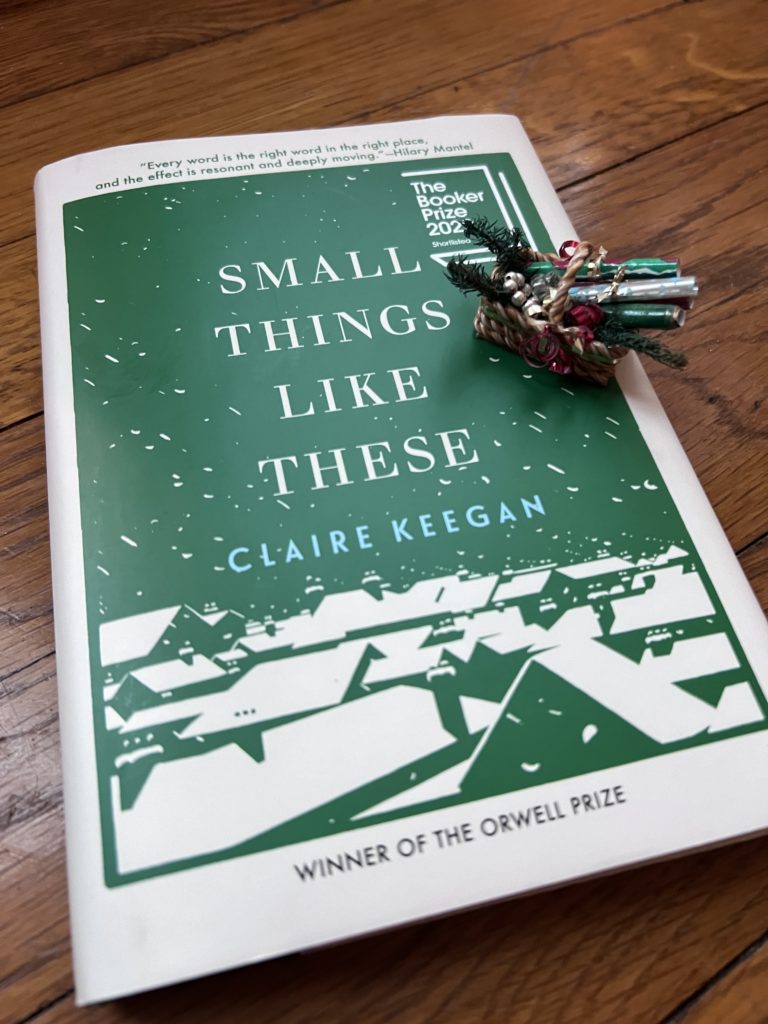
    “Before going back into the house, he’d washed his face at the horse-trough, breaking the ice on the surface, pushing his hands down deep in the cold and keeping them there, to divert his pain, until he could no longer feel it.” Small Things Like These by Claire Keegan

    Chilling Times

    Note to self: if you go to Ireland in the winter, bring an extra pair of boots.

    From the very beginning of Small Things Like These, we know this is going to be a cold novella. It is beautifully written and expertly crafted so that every page chills the holiday spirit. Consider: “And then the nights came on and the frosts took hold again, and blades of cold slid under doors and cut the knees of those who still knelt to say the rosary.” Many readers will see this as a novel of hope and courage, others may not. Set during the Christmas season in a small, economically-depressed Irish town in the 1980s, it features a middle-aged self-made man, Bill Furlong.

    Furlong is a coal merchant who is getting by. He is married to the woman he loves; he is proud of his five daughters, all of whom are excelling in the best school in town. He acknowledges the good life he has built, yet worries that he will lose it all. His thoughts from the start are depressive. Here is our hero, a few nights before Christmas after attempting a conversation with his wife: “Not for the first time, Furlong felt that he was poor company for her, that he seldom made a long night shorter.”

    Furlong is in a sulky, reflective mood. His work is hard and unrelenting. His wife doesn’t want to hear about the “small things” that are important to him such as giving away his last bit of change, or going out of his way to help someone who needs a ride. He is concerned for his children and thinks: “They could be like young witches sometimes, his daughters, with their black hair and sharp eyes.” This gloomy melancholy oozes in and out of the cold arches of the story.

    Why is he in such a funk? I believe he qualifies as a man in a mid-life crisis — one expects to see a sports car suddenly appear in his driveway. After all, Furlong is weary from the monotonous rush and smallness of his life. He can’t stop thinking about his past — and the unfortunate realities of it. He was raised in a rich woman’s home, a housekeeper’s bastard son. We hear of many details: his mother’s low station, his outcast standing, his ignorance of his father’s identity, etc.

    As he wanders farther down the path of nostalgia, his unease with his current life grows and he searches for an alternative path. “For a time he stood listening and looking down at the town, at the smoke starting up from the chimneys and the small, diminishing stars in the sky. One of the brightest fell while he was standing there, leaving a streak like a chalk mark on a board for just a second before it vanished. Another seemed to burn out and slowly fade.”

    This novella doesn’t have the length necessary to explore the fullness of the situation it beautifully presents in the first half of the story.  In the second half, the author has taken shortcuts and has failed to provide critical scenes. Consequently, the second half feels contrived; too many coincidences occur. Furlong wanders around the convent (why?), stumbles into girls scrubbing a chapel floor and later finds one of those girls in the coal shed. It isn’t clear why she is there — the reader has to fill in the back story.  The girl asks him to help her find her baby and/or escape. While Furlong ponders the encounter, a nun appears, reclaims the girl, and invites him in to tea. During the course of this tea, an unattractive, machismo, side of him emerges: “He sat on, encouraged by this queer new power. He was, after all, a man amongst women here.”

    Leaving the convent, he continues to ruminate over the girl, but now with a different spirit. He doesn’t discuss her with his wife or a trusted friend or try to find a legitimate way to help her. Rather, without a clear understanding of her situation, he internalizes what he imagines her plight is and begins to liken her fate with that of his mother. It is now Christmas Eve, he plods through hours, visiting destinations of his life, receiving warnings in every direction he turns. “For a while, he simply walked along the quayside with his hands deep in his pockets, thinking over what he’d been told and watching the river flowing darkly along, drinking the snow.” All the while, he is building up courage to act. He wants to get the girl away from the convent. However, he knows that doing so will risk the well-being of his business, his marriage, and his daughters’ futures. Will he trade the life that he worked hard to achieve for the chance at being a hero in his own heart?

    “It would be the easiest thing in the world to lose everything, Furlong knew.”

    (FYI: the narrator demonstrates bias against Catholicism, e.g. jabbing sentences and metaphors such as slicing the knees off of the faithful praying the rosary, likening destructive crows to nuns, spiking the convent.)

    A favorite sentence:

    “Magically, then, the streets seemed to change and come alive under the long strands of multi-colored bulbs which swayed, pleasantly, in the wind above their heads.”


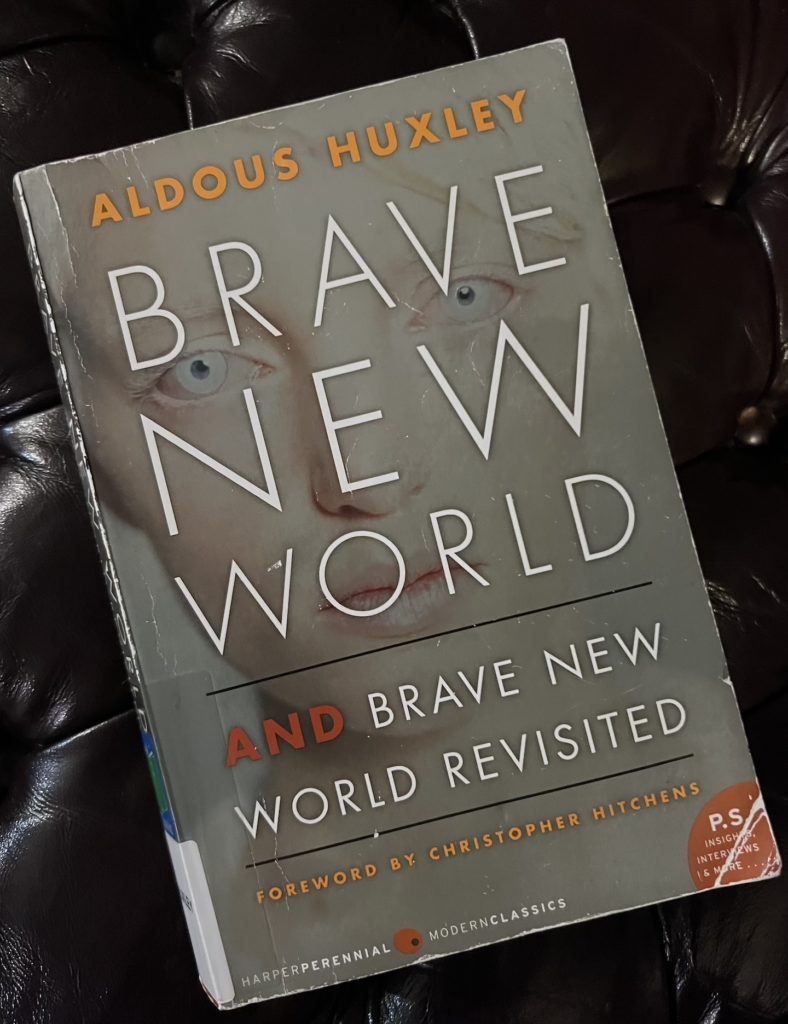
  • Brave New World by Aldous Huxley

    “It suddenly struck me the other day that it might be possible to be an adult all the time.”


    Every once in a while, a book club should read a classic dystopian novel.

    Planetary Motto: Community, Identity, Stability

    Have you ever wondered what a rational, engineered civilization would look like? One that prioritizes the happiness of its citizens above all? One where “there isn’t any serious need for a civilized man to bear anything that’s seriously unpleasant?” Where people are “adults intellectually and during waking hours, [however] infants where feeling and desire are concerned?” This is a curious thought-experiment; one that Aldus Huxley explores in Brave New World.

    “History is bunk!” “Ending is better than mending.” These are two of the multitude of slogans that the civilized people of Brave New World are brainwashed into believing. No one questions or seeks the purpose of life. After all, “happiness is the sovereign good.” The citizens remain in a perpetual state of infantile adulthood where sexual promiscuity, regular drug use, extreme sports, exaggerated entertainment, and wanton consumption are not only encouraged by society, but are expected, if not required.

    In this engineered world, eugenic science and technology are taken to the limit to create five castes of humans ranging from Alphas with superior human intelligence down to Epsilons with no human intelligence (“the lower the caste, the shorter the oxygen”). The Alphas are the leaders and intellectuals of the society whereas the lower castes are consigned to menial labor. This is a world of social slavery absolutes. Everyone is conditioned from bottle-birth (no human female involved) to adulthood to be content to do the jobs assigned to them. In their leisure hours, they are compelled to seek hedonistic pleasures.

    It is bad to be alone. Therefore nothing is private. “Everyone belongs to everyone else.” There are no exclusive relationships, no families, no marriages, no children to raise. All activities are communal. Conflicts that arise are quickly snuffed out by a poof of soma, an idealized drug that puts people into a state of paradise.

    Poof, and freedom is forever out of reach. Pleasurable slavery at the expense of art, science, philosophy and religion. As the Controller for Western Europe further explains, “We’ve got youth and prosperity right up to the end. What follows? Evidently that we can be independent of God…God isn’t compatible with machinery and scientific medicine and happiness. That’s why I have to keep these books locked up in the safe…People would be shocked.”

    There are no books! Why do dystopias always deprive their citizens of books? Consider 1984 and Fahrenheit 451.

    If we could plunk ourselves down into this Brave New World, just for a little bit, how might we react? Huxley has given us a hint. He takes a young man, John the Savage, who was born and raised outside of civilization, and thrusts him into this sensually-fulsome world. At first, John is patient and cooperates by trying to understand his experiences through the filter of Shakespeare. He falls in love with an Alpha woman. However, despite his efforts, his values are in constant clash with all that he sees. He wants to change this world, make it more human, more fallible. But they won’t let him. And they won’t let him return to his native land either. He is trapped. Do you think this is going to end well?

    What are we to make of this mess? Why read it? Truly it is a precautionary tale.


    My favorite sentence:

    “Some men are almost rhinoceroses. They don’t respond properly to conditioning.’”

  • Mrs. Dalloway by Virginia Woolf

    “Shredding and slicing, dividing and subdividing, the clocks of Harley Street nibbled at the June day…”


    Last weekend, I finished reading Virginia Woolf’s Mrs. Dalloway, our book selection for October. At first glance and after a few pages, the narrative style seemed impenetrable. I found the sentences ponderous and meandering. I struggled, annotating the narrative by making notes in the margins. Without warning, a multi-level puzzle of intertwined lives unfolded before my eyes. This happened at about midnight upon reaching page 43, when the words glimmered with penetrating eloquence and meaning. The long, winding sentences exposing the innermost thoughts of the characters became as beautiful as birds gliding effortlessly through the sky.

    This novel may be hailed as a literary masterpiece, but I believe it’s first and foremost a tale of tangled and tragic love stories.

    Let’s start with Peter. Newly returned from India, Peter is skirting about London, avoiding his stated reason for being there, and “seeing” his former love in every shop window. Clarissa Dalloway, who rejected Peter’s proposal thirty-four years earlier, is giving a party that night.

    Meanwhile, a second love story is unraveling. Septimus Warren Smith, a war veteran, is going mad from PTSD. His young Italian wife, Lucrezia, doesn’t understand what is happening, but does wonder if her marriage is the way marriages are supposed to be. She would like a baby.

    Then there is Richard, who married Clarissa, yet is jealous of Peter, and is unable to tell Clarissa that he loves her. He brings her roses.

    We have a (sigh) love situation which involves a middle-aged, plain-looking woman who turned to religion for companionship but has fallen in love with her young student, Clarissa’s daughter.

    Using little words and big words, Virginia Woolf  creates this fabulous labyrinthian tale which takes place in a single day in the middle of June. The characters weave in and around each other throughout this day. We learn that many, as well, have a shared past, thirty-four years earlier in a small country estate called Bourton.

    At the end of the day they all converge at Mrs. Dalloway’s party.

    Big Ben is the unifying element. As it chimes, it slices and dices the character’s thoughts: past, present, and future. If you leave breadcrumbs for yourself as you are reading, it is easier to sort through the web of thoughts that the hours punctuate.

    Book clubs: Fair warning. This may be a challenging read for members who are used to contemporary novels favored by book clubs. Don’t be daunted! It is well worth the read. In 1923, one-hundred years ago, Virginia Woolf bravely introduced new narrative techniques with this novel. It remains brilliant to this day and deserves a place on your bookshelf.


    My favorite sentence:

    “For she was a child, throwing bread to the ducks, between her parents, and at the same time a grown woman coming to her parents who stood by the lake, holding her life in her arms which, as she neared them, grew larger and larger in her arms until it became a whole life, a complete life, which she put down by them and said, ‘This is what I have made of it! This!’”